


Opinion by Darren Bromley-Davenport, Technical Manager at Orbia Fluor & Energy Materials
A tightening regulatory landscape is driving the pharmaceutical industry to innovate more sustainable, low-global warming potential (GWP) solutions for inhalers that deliver essential treatment for respiratory illness.
With doses estimated at 43 billion annually and continuing to increase1, pressurised metered-dose inhalers (pMDIs) remain an important treatment option because the propellant helps ensure consistent medicine delivery independent of inspiratory effort. The industry must now transition to a low-GWP pMDI propellant as a sustainable alternative.
One of the leading low-GWP propellant candidates is HFA-152a (Zephex® 152a), developed by Orbia Fluor & Energy Materials (F&EM), which delivers an approximate 90% reduction in carbon footprint2 and is not classified as a forever chemical (PFAS)3,4. Industry leaders like Chiesi have already received MHRA approval for one of their HFA-152a-containing pMDIs, while others are awaiting decisions following submission of regulatory filings since H2/2025, confirming that the industry’s frontrunners have begun the transition3.
The industry learned a valuable lesson during the transition from CFCs to HFAs in the 1990s – there’s more to consider than simply switching the propellant. At the time, many assumed formulations and devices would perform similarly with the replacement propellant. Instead, differences in physical and chemical properties triggered significant redevelopment work, causing delays and, in some cases, product shortages.
The transition to HFA-152a requires a detailed understanding of how the propellant interacts with active pharmaceutical ingredients (APIs), formulation excipients, valves, elastomers and other device components. It also demands the navigation of evolving F-gas compliance requirements, intellectual property considerations and increasingly complex development timelines.
As pMDI’s fall within the EU F-gas phasedown schedule since 2025, transitioning to low-GWP propellants such as HFA-152a also enables a significantly lower quota use and associated costs compared to higher-GWP options. However, the time to transition, reformulate, test, validate and commercialise low-GWP alternatives is now.
The value of expert support
The industry has a responsibility to ensure a smooth transition. This is why Orbia F&EM combines regulatory support, F-gas administration, formulation expertise and clinical manufacturing capabilities under one offering, including:
- Compatibility testing between low-GWP propellants, APIs and component materials.
- Formulation development and optimisation.
- Performance testing, such as shot weight, leak rate, delivered dose uniformity (DDU) and aerodynamic particle size distribution (APSD).
- Long-term stability studies.
- Clinical batch manufacturing in GMP-certified environments.
- Guidance on F-gas quota management and compliance.
- Engineering support for modifying existing production areas or setting up new ones.
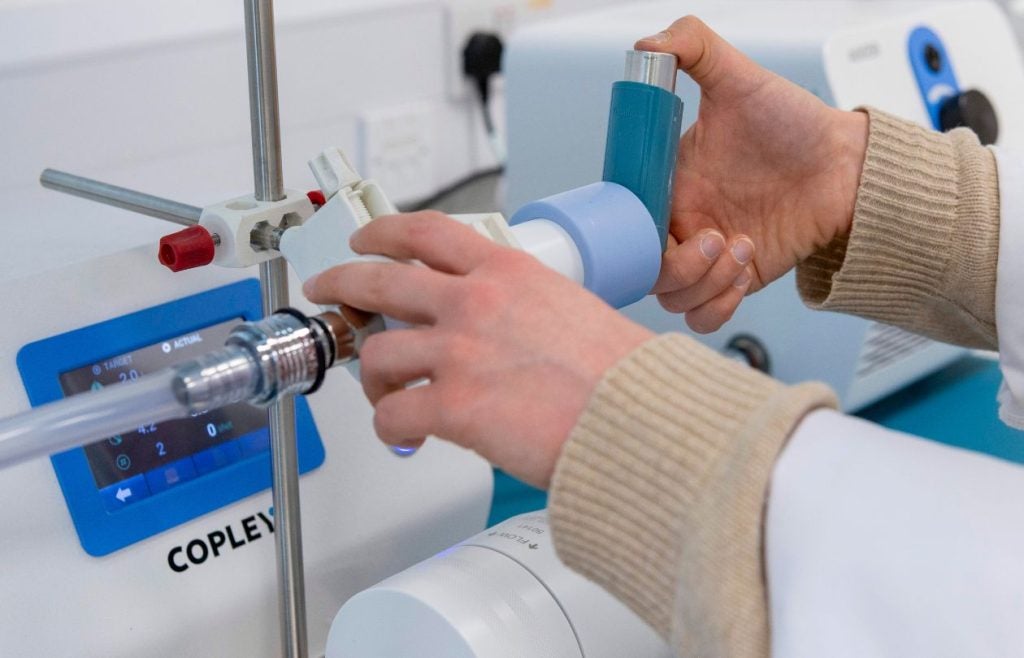
What makes these services different
Our approach is built around an end-to-end transition pathway that spans early-stage research through to GMP clinical supply and finally, commercial supply.
The company has invested heavily in ATEX-rated laboratory infrastructure, specialist personnel and analytical capabilities to understand how HFA-152a behaves in real-world formulations. This includes expertise in analytical chemistry, materials science, pMDI characterisation and safe handling of flammable propellants.
For component manufacturers, services include compatibility assessments, materials testing and long-term stability studies. For pharmaceutical companies, support ranges from early-stage formulation work through to in-vitro equivalency testing and pilot-scale GMP filling.
Since obtaining its Investigational Medicinal Products (IMP) licence in 2023, Orbia F&EM has produced GMP clinical batches at its facility, providing pharmaceutical companies with access to MHRA-approved clinical manufacturing capabilities that would otherwise require significant investment.
Supporting development from bench-scale filling through to clinical sample production, the company helps organisations maintain momentum as they move towards regulatory submission and commercialisation.
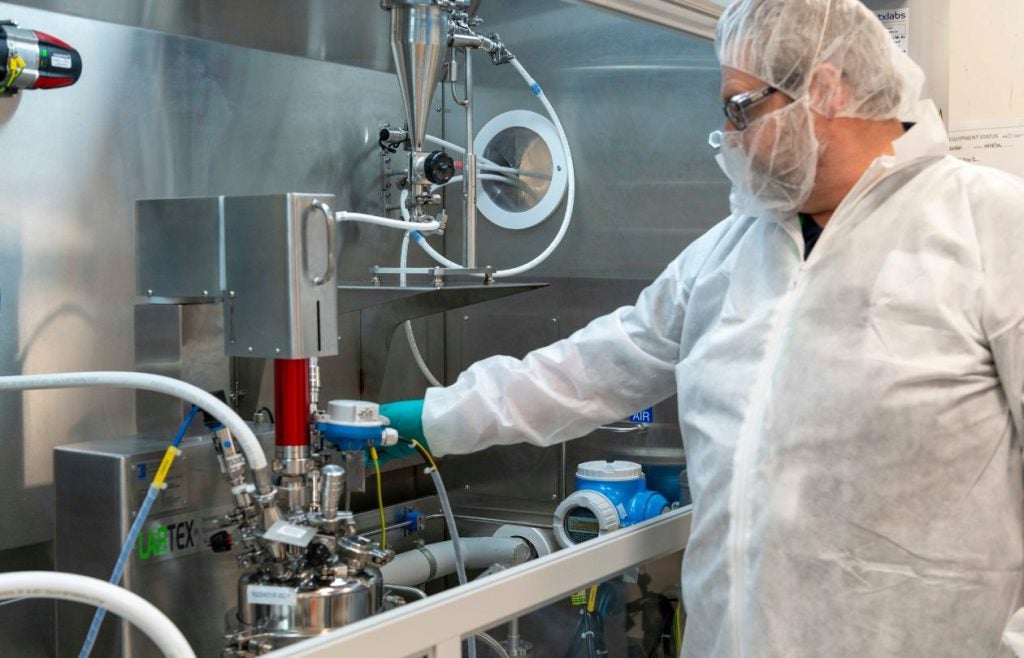
Managing F-gas compliance
The transition is also creating new administrative and regulatory pressures. Since 1 January 2025, the EU HFC quota system applies to HFC compounds manufactured or imported for the manufacture of metered-dose inhalers (Article 16), and to finished pMDIs imported into the EU (Article 19) 5. Inhaler manufacturers based in the EU require quota coverage for the bulk import of propellants incorporated into their products. Those based outside the EU need to acquire quota authorizations to import finished cans into the EU.
This creates an additional layer of complexity, particularly for global manufacturers and developers. Support with quota administration, compliance and authorisation management is therefore becoming an increasingly important component of successful transition strategies.
What’s coming next?
The respiratory pharma sector now has a relatively short runway to transition to new propellants. Late adopters risk encountering capacity constraints, regulatory bottlenecks and longer development timelines as demand for specialised testing and manufacturing support increases.
With 2030 approaching rapidly, the focus is shifting from whether the industry will transition to low-GWP pMDIs to how efficiently and successfully that transition can be achieved.
Working with experienced specialist partners that can support both technical development and regulatory readiness – from assessing reformulation equivalency needs and establishing a low-GWP development strategy to compatibility testing, formulation evaluation and development, GMP clinical batch manufacturing, and securing F-gas compliance pathways – can help accelerate product development while reducing transition risk.
For companies to keep their life-saving therapies on the market long term, the time to act is now.
References
- Montreal Protocol on Substances that Deplete the Ozone Layer – Progress Report [May 2026] Available at: TEAP-May2026-Progress-Report-vol1.pdf [Last Accessed July 2026].
- Orbia Fluor & Energy Materials: Zephex 152a – Low-global warming potential medical propellant [online] Available at: www.orbia-fem.com/pharma/products/zephex-152a [Last Accessed July 2026].
- Chiesi Marks Significant Step in its Net Zero Journey with MHRA Approval of its First Pressurised Metered-Dose Inhalers Containing a Next-Generation, Low GWP Propellant [online] www.chiesi.uk.com/media/press-releases/2026-07-21-clenil-mhra-approval [Last Accessed July 2026].
- Per and polyfluorinated chemicals (PFAS) [online] www.oecd.org/en/topics/sub-issues/risk-management-risk-reduction-and-sustainable-chemistry/per-and-poly-fluorinated-chemicals.html [Last Accessed July 2026].
- Regulation (EU) 2024/573 of the European Parliament and of the Council of 7 February 2024 on fluorinated greenhouse gases, amending Directive (EU) 2019/1937 and repealing Regulation (EU) No 517/2014 at: https://eur-lex.europa.eu/eli/reg/2024/573/oj [Last Accessed July 2026]
