
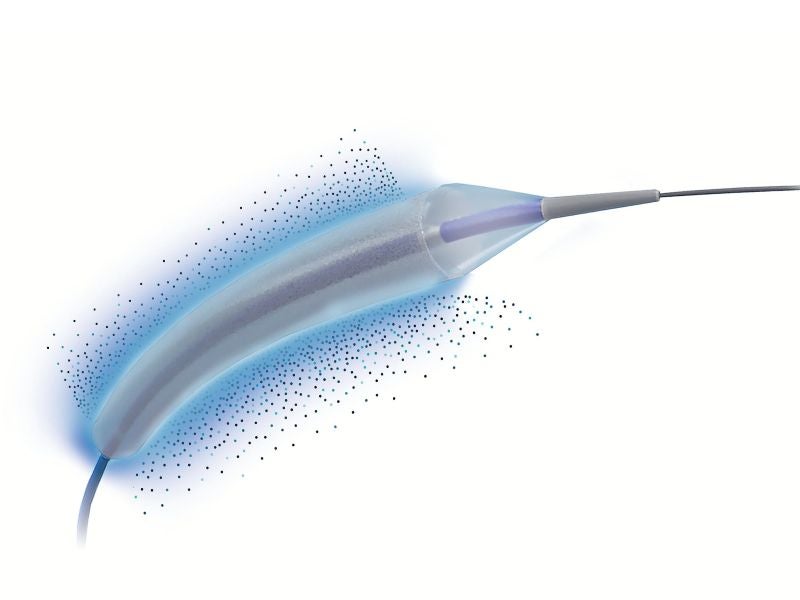
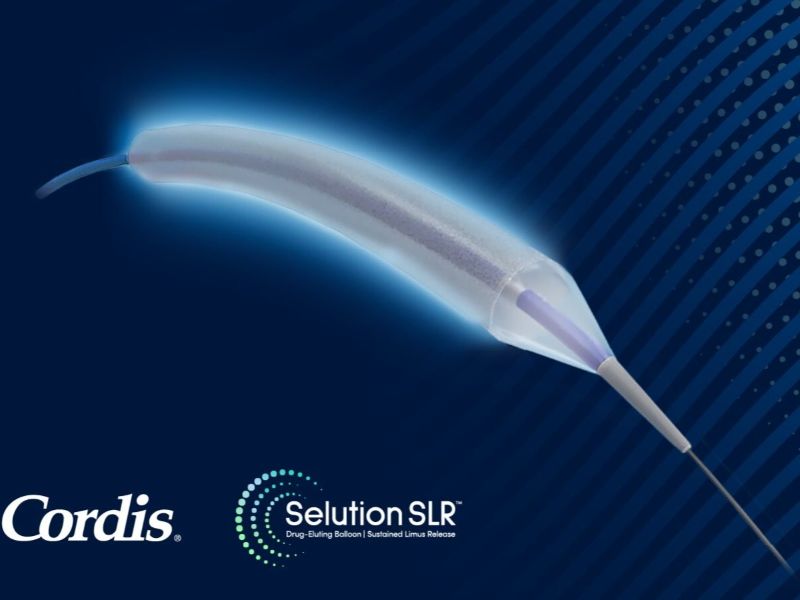
The SELUTION SLR™ (Sustained Limus Release) percutaneous transluminal coronary angioplasty (PTCA) drug-eluting balloon (DEB) is a combination coronary interventional device engineered to restore myocardial blood flow and suppress restenosis in previously stented vessels.
Developed by MedAlliance, a Cordis company, the catheter-based device administers a sustained formulation of the anti-proliferative drug sirolimus directly to the vessel wall, avoiding the placement of a permanent metallic scaffold.
Recommended Buyers Guides

The device is currently distributed across more than 65 countries, with global clinical utilisation exceeding 250,000 patients.
SELUTION SLR regulatory approvals
The SELUTION SLR first secured CE mark certification for peripheral artery disease in Europe in February 2020, followed by an indication for coronary artery disease in May 2020.
The US Food and Drug Administration (FDA) approved the device for the treatment of coronary in-stent restenosis (ISR) in September 2026.
This regulatory clearance facilitates the entry of Cordis into the coronary drug-coated balloon segment, providing an alternative interventional approach for managing recurrent narrowing within previously implanted coronary stents.
The US regulator previously granted the platform four breakthrough device designations, encompassing native coronary artery lesions, coronary ISR, below-the-knee peripheral interventions and arteriovenous fistulas.
SELUTION SLR drug-eluting balloon design and features
The SELUTION SLR device features a rapid exchange (RX) semi-compliant catheter featuring a 140cm usable catheter length, a 0.016in tip entry profile and compatibility with standard 0.014in guidewires.
The catheter features a balloon at the distal end and a shaft with a port at the proximal end. It has a proprietary coating engineered to achieve sustained, controlled pharmaceutical elution comparable to drug-eluting stent profiles.
To enhance pushability and lesion crossing, the catheter features a tapered distal tip and an 18–21cm segment of the distal shaft, which is treated with a lubricious hydrophilic coating.
The catheter’s expandable, semi-compliant balloon is engineered to achieve predictable diameters and lengths under recommended inflation pressures. It operates at a nominal pressure of six bar and carries a rated burst pressure of 12 bar.
The balloon features two embedded radiopaque markers that define the active working length to guide accurate positioning across the target stenosis. For protection, each device is supplied with a disposable wire stylet within the distal lumen and an outer protective sheath covering the balloon, both removed prior to use.
The product line is available in balloon lengths between 10mm and 40mm, with diameters spanning 1.5–5mm. Minimum guide catheter requirements are 5 French (Fr) for balloon diameters from 1.50mm to 3.75mm, and 6 Fr for sizes ranging from 4mm to 5mm.
Drug delivery technology
The SELUTION SLR DEB balloon surface is coated with a micro-encapsulated formulation designed to deliver a sustained antiproliferative effect into the coronary vessel wall. It uses sirolimus as its active pharmaceutical ingredient at a dose of one microgram/mm².
The device incorporates four-micrometre microreservoirs containing sirolimus within a biodegradable polymer matrix. Following delivery to the vessel wall, the polymer degrades gradually, enabling drug release for up to 90 days without leaving a permanent implant.
A proprietary phospholipid coating protects the microreservoirs and supports drug transfer to the vessel wall. Cordis’ Cell Adherent Technology enables the microreservoirs to be applied to the balloon surface and adhere to the vessel lumen during angioplasty.
The device requires 36% less delivery force than the agent drug-coated balloon.
Clinical studies on SELUTION SLR PTCA drug-eluting balloon
The FDA clearance was supported by findings from the SELUTION4ISR trial (NCT04280029), a prospective, multicentre, single-blind, randomised non-inferiority study comparing the device against the standard of care (SOC) in patients presenting with coronary ISR. In the control group, SOC comprised drug-eluting stents in approximately 80% of cases.
The trial recruited more than 400 patients across 48 clinical centres in the US, Canada, Brazil and Europe. At 12 months, the trial met its primary endpoint of non-inferiority within the target patient population.
Across all randomised participants, the 12-month target lesion failure rate was 15.2% in the SELUTION SLR group compared to 13.5% in the SOC cohort. These findings contribute to a broader clinical evidence base covering more than 5,000 patients globally.
Other studies
The SELUTION SLR DEB was evaluated in two major peripheral clinical trials, the SUCCESS PTA Study (NCT04776434) and SELUTION SFA Japan Trial.
The SUCCESS PTA study was a prospective, observational global registry evaluating the SELUTION SLR DEB in 723 patients across 27 clinical sites in Europe, Asia and South America. The cohort comprised patients with claudication (74.2%) and chronic limb-threatening ischaemia (CLTI) (25.8%).
The primary endpoint, freedom from clinically driven target lesion revascularisation (CD-TLR) at 12 months, was 91.1% in the overall population, 91.3% among patients presenting with claudication and 90.3% in the CLTI cohort. In addition, 88.1% of patients demonstrated functional improvement of at least one Rutherford clinical category over the study period.
The SELUTION SFA Japan study, a prospective, single-arm trial conducted across 13 clinical centres in Japan, evaluated the SELUTION SLR DEB in 134 patients with complex vascular disease.
At the three-year follow-up, the study demonstrated a primary patency rate of 81.5% and a freedom from CD-TLR rate of 93.8%. According to the trial data, this represents the only drug-eluting technology with core laboratory-adjudicated three-year patency exceeding 80%.Top of Form
The device is also being evaluated in the SELUTION4DeNovo IDE trial, which is intended to support a future US FDA premarket approval application. Cordis completed enrolment in this randomised study of 960 patients, which compares the device with drug-eluting stents for the treatment of de novo lesions in small coronary vessels.s the device with drug-eluting stents for the treatment of de novo lesions in small coronary vessels.
