
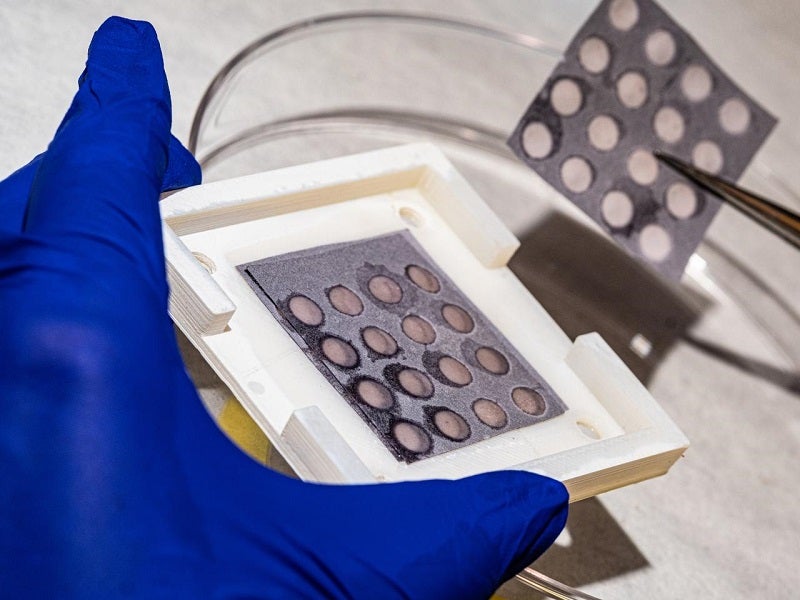
An experimental device made from layered filter paper is helping Rice University bioengineers study calcifying heart diseases.
The filter paper is structured in a way that mimics the layering of aortic heart valves, recreating the means by which cells spread through cardiac tissue in a laboratory setting. It may not look much like a heart valve, but in practice it simulates the proliferation process in the same way.
Go deeper with GlobalData


Discover B2B Marketing That Performs
Combine business intelligence and editorial excellence to reach engaged professionals across 36 leading media platforms.
Heart valves can become hardened by calcium deposits over time, making them less flexible. This means they often lose their ability to seal the heart’s chambers.
Collagen 1, a natural protein and a component in heart valves’ extracellular matrix, has a strong association with calcification when found outside the heart valves’ fibrosa layer.
Rice University bioengineer Jane Grande-Allen said: “When tissues make a lot of excess type 1 collagen, it’s called fibrosis. Fibrosis can happen in many types of tissues and it accompanies calcific aortic valve disease (CAVD). That doesn’t necessarily mean collagen will always cause CAVD, but it definitely drove the calcification-linked phenotype in the cells that we cultured.”
The researchers arranged the filter paper layers to support heart valve cells embedded in either collagen 1 or hyaluronan, an acid normally found in the heart’s spongiosa layer. The papers were held in place with 3D printed polymer holders with arrays of holes, and imbued with a wax pattern to eliminate crosstalk between the open circles.
When collagen 1 cells were present in multiple layers the cells’ behaviour began to precede the formation of mineralised lesions.
Grande-Allen said: “The first step has been to develop models that mimic the way the cells in valves behave. The next step would be to see them actually calcify. Once that is in hand, we can start to test chemicals that would block that calcification process.”
Current treatments for CAVD involve replacement of the calcified valve with human or animal donor tissue or a mechanical valve. Given the device’s ability to accurately model the functions of a heart valve’s layers, the research team hopes it could one day support the development of a non-invasive medication for heart disease.


