Applications in Medical Device Manufacturing
The use of aqueous cleaning in medical device manufacturing can provide numerous benefits in terms of efficacy, minimal surface contact and reduced potential and easier cleaning validation.

Alconox provides critical detergents for precision cleaning applications in a wide range of industries, including the biotechnology, healthcare, laboratory, medical device and pharmaceutical sectors.

You have successfully submitted your enquiry. Someone from our company will respond ASAP

Alconox provides critical detergents for precision cleaning applications in a wide range of industries, including the biotechnology, healthcare, laboratory, medical device and pharmaceutical sectors.
Manufactured in the US, the company’s high-quality liquids and powders provide precise sanitation of equipment such as mixers, tanks and blenders.
Alconox’s technical staff supports engineers and scientists by recommending high-quality formulas and solutions to specific precision cleaning problems.
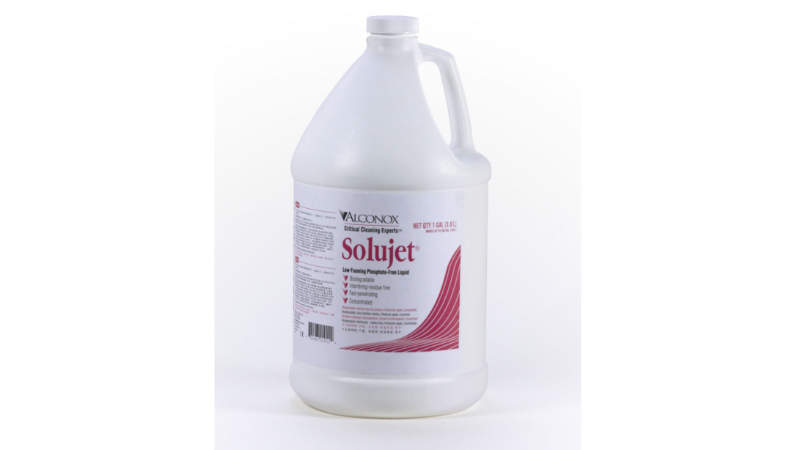
Alconox’s critical cleaning solutions help increase the value and quality of products used in the medical device sector, ranging from tablet presses to stainless-steel mixing tanks.
The company’s portfolio do not leave residues, are biodegradable and free-rinsing, and contain no softeners, brighteners corrosion inhibitors, rinse aids, dyes or fragrances.
The cleaners provide optimal performance using wetting agents that allow cleaning solutions to access hard-to-reach cracks and crevices. Aqueous cleaning provides many benefits to medical device manufacturers, including efficacy, reduced residue potential, and easier cleaning validation.
Alconox’s aqueous cleaners are suitable for various cleaning methods such as soak, machine, manual and automated clean-in-place (CIP).
Available liquids and powders range from acidic to basic, and high-emulsifying to low-foaming, ensuring a flexible approach to many applications.
Alconox’s range of biodegradable aqueous cleaners have a low environmental impact and are readily disposable after use, requiring no further treatment. The cleaners also offer a safe alternative to semi-aqueous or solvent-containing products that tend to have safety risks and are not environmentally friendly.
Alconox’s aqueous cleaners help preserve the integrity of high-fidelity, research-quality medical devices, allowing sterilisation or preparation for sterile packaging.
Its brands are suitable for critically cleaning a wide range of materials, including silicone rubber, polyurethane, stainless-steel, titanium and plastic.
They are formulated to clean biomechanical and electronic medical devices without leaving performance-reducing residues. In addition, class III medical devices can be cleaned to high standards ready for implanting or dental applications, including medical procedures such as knee, hip and shoulder replacements.
Alconox was founded in 1946 when Louis Zisman and William Lebowitz began manufacturing and distributing detergents comprising a wetting agent that cleaned glassware without leaving a residue.
Over the decades, Alconox has branched out to solve cleaning challenges worldwide, including sanitising biotech, healthcare, pharmaceutical and medical device equipment.
The use of aqueous cleaning in medical device manufacturing can provide numerous benefits in terms of efficacy, minimal surface contact and reduced potential and easier cleaning validation.
Cleaning validation or verification is a necessary regulatory compliance step in medical device manufacturing and reprocessing. Support from the cleaner manufacturer can save time and money when establishing either cleaning validation or cleaning verification.
Cleaning validation is a necessary and time-consuming part of manufacturing pharmaceuticals. The validation process can be expedited and the cost reduced if the cleaner supplier can provide support — ultimately allowing pharmaceuticals to get to market faster and at a lower cost.
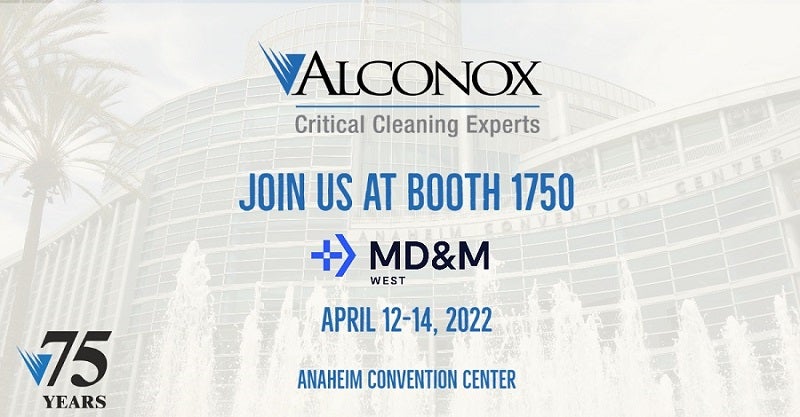
We are really excited to be heading to Anaheim for MD&M West.
We were asked the question: A number of your Tergazyme related TechNotes and recommendations include warm temperatures, which can still denature some proteins and hormones, leading to cleaning problems.
Want to know if our rinsing process (Ultrasonic Cleaning with Sterile distilled water for ten minutes) is appropriate silicone o-ring rinse-off? We have the answer.
Alconox explains to its clients the best way to manually clean CPAP masks. See below for advice.
Our supply chain, manufacturing, and distribution system in the US remains unaffected by Covid-19, as all of our raw materials are US-sourced.
Q. We truly enjoy the effectiveness of Alcotabs. They have been excellent. As we are a green-focused company, we take pride in our stance for reuse / recycle of whatever we can. Can we send back empty Alcotabs jars for reuse?
Join Alconox Inc at the ISPE 2019 Annual Meeting and Expo in Las Vegas, NV, 27-30 at Booth #101 to receive unique gifts, expert technical support for your critical cleaning applications and detergent samples.
Alconox Inc will be appearing at the forthcoming Cosmorpof North America, the Mandalay Bay Convention Centre, Las Vegas.
Visit Alconox at Cphi North America in Chicago to receive its unique gifts and expert technical support for your critical cleaning applications and detergent samples.
Alconox will be present at Interphex in New York City, US.
Alkaline hydrolysis is a chemical reaction that takes place when tough organic residues are exposed to an alkaline solution. Alkaline hydrolysis breaks these residues into smaller more water-soluble and more easily emulsified molecules.
Q) How do you remove protein out of pipes, centrifuges and tanks in a recirculation clean-in-place (CIP) environment with water temperatures averaging 20°C?
Can we use high-foaming detergents in an automated cleaning line?
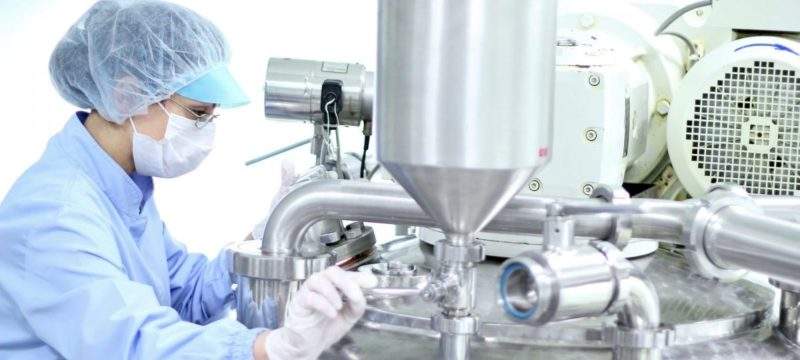
From a pure efficacy perspective, manual cleaning is often better than automated cleaning. High-foaming detergents (better emulsification) may be used and mechanical energy can be applied (scrubbing, soaking, sonication and/or elbow grease of course).
Q) We are looking for a laboratory dishwasher detergent that does not contain perchlorates. One of our end users analyses for trace levels of perchlorates, so we cannot have a detergent that has that type of impurities.
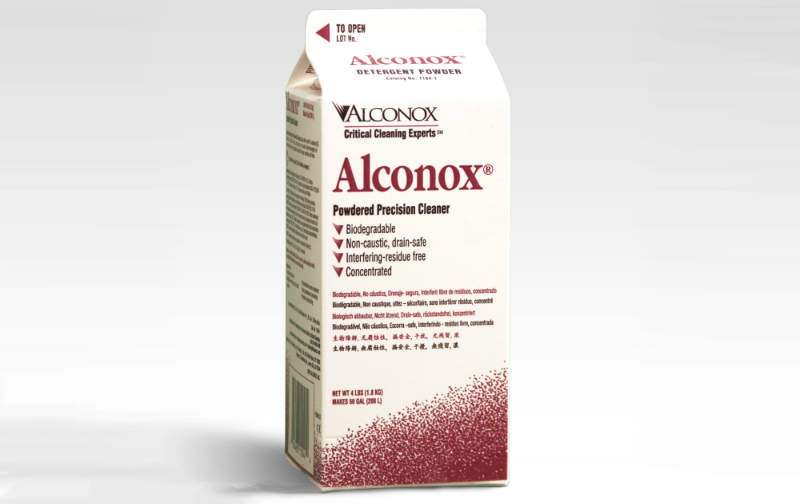
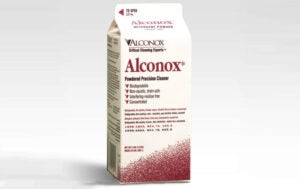
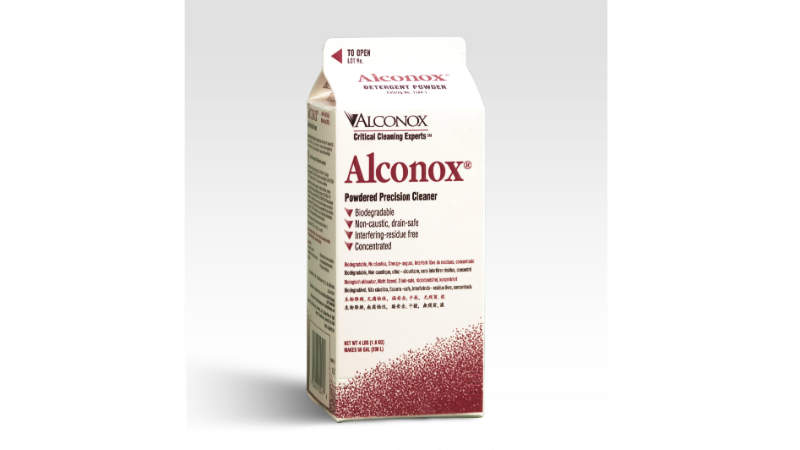
Alconox is a concentrated, anionic detergent for manual and ultrasonic cleaning.
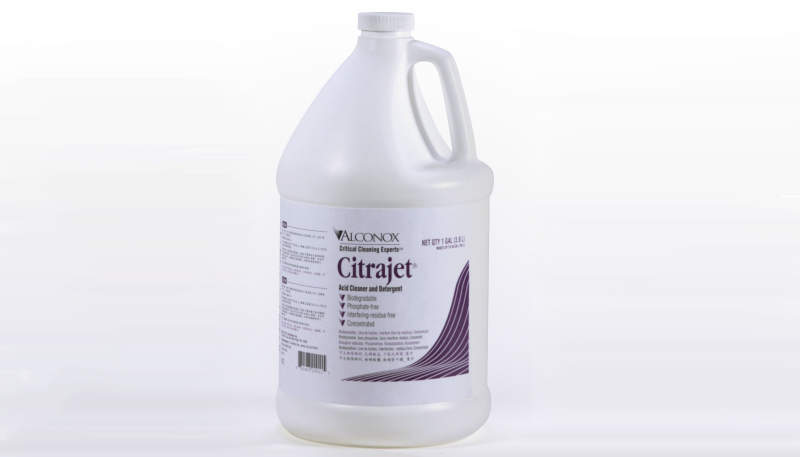
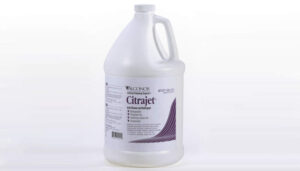
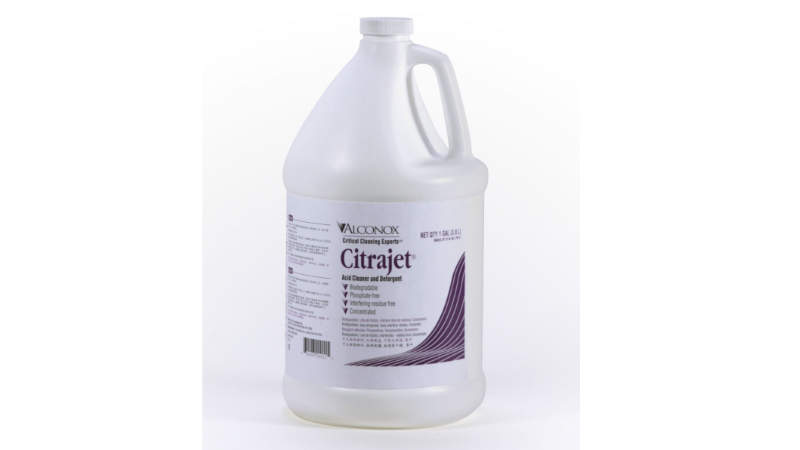
Citrajet is a low-foaming and phosphate-free concentrated liquid cleaner and metal brightener for high-performance removal of metal oxides, scales, salts, and inorganic residues.
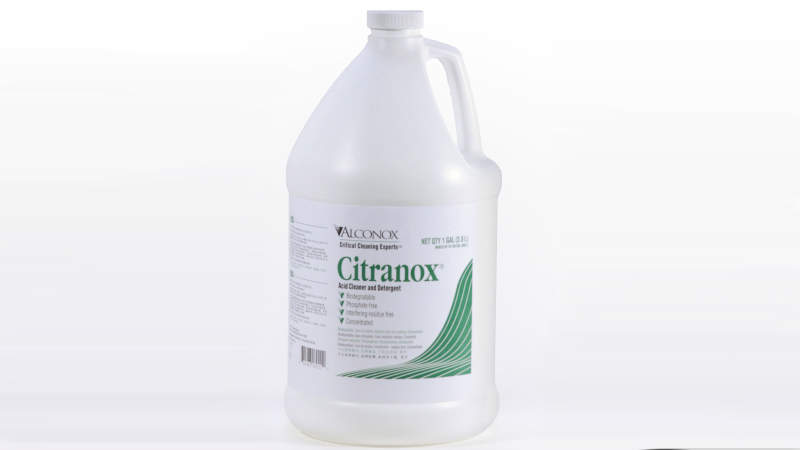
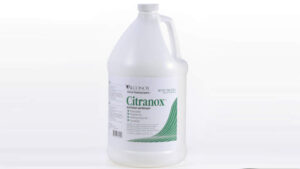
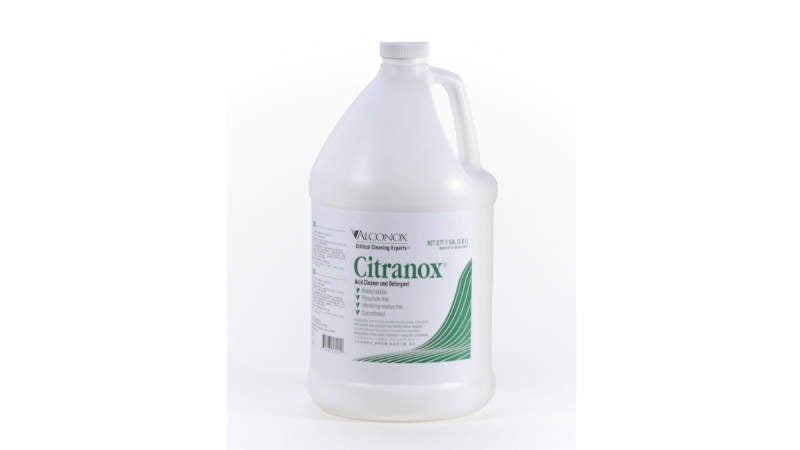
Citranox is a phosphate-free, concentrated cleaner and metal brightener for high-performance removal of metal oxides, scale, salts and inorganic residues.
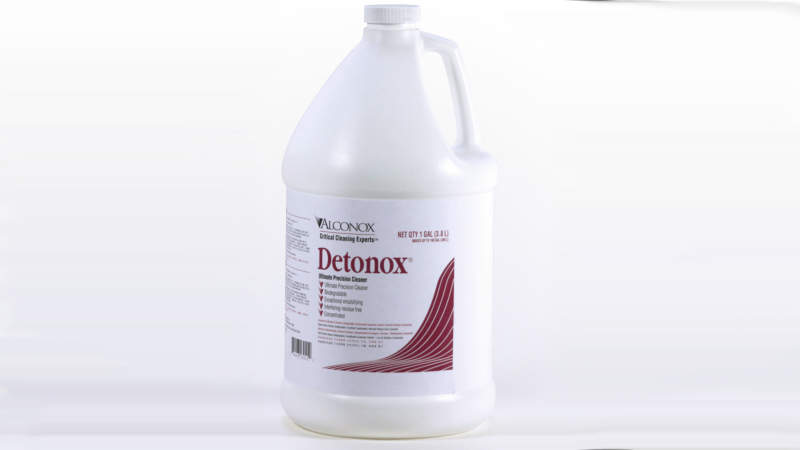
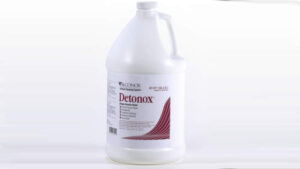
Detonox is used for hand washing and ultrasonic use on difficult residues.
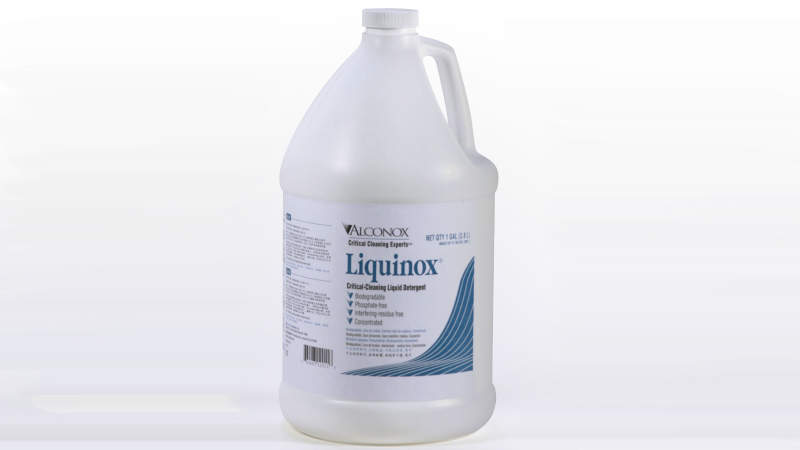
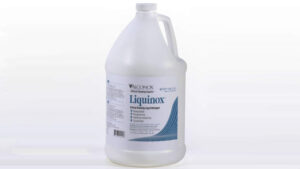
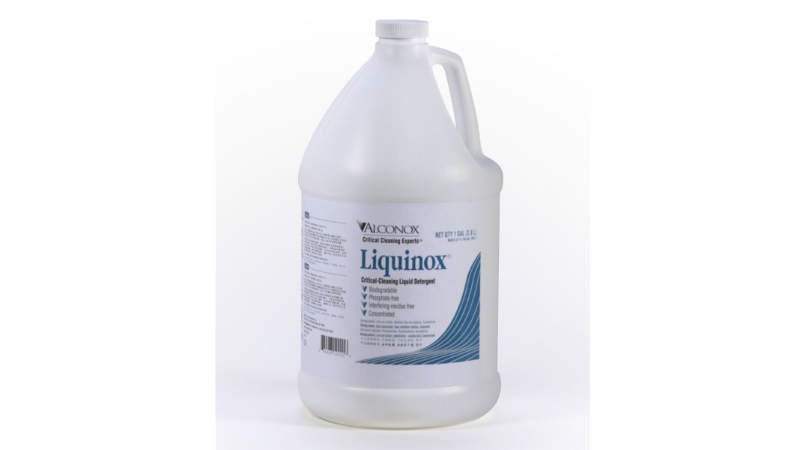
Liquinox is a concentrated, anionic phosphate-free detergent for manual and ultrasonic cleaning.
Tergazyme Enzyme-Active Powdered Detergent cleans items such as medical instruments, laboratory ware, pharmaceutical apparatus, industrial parts, bioprocess equipment, tanks and reactors.