

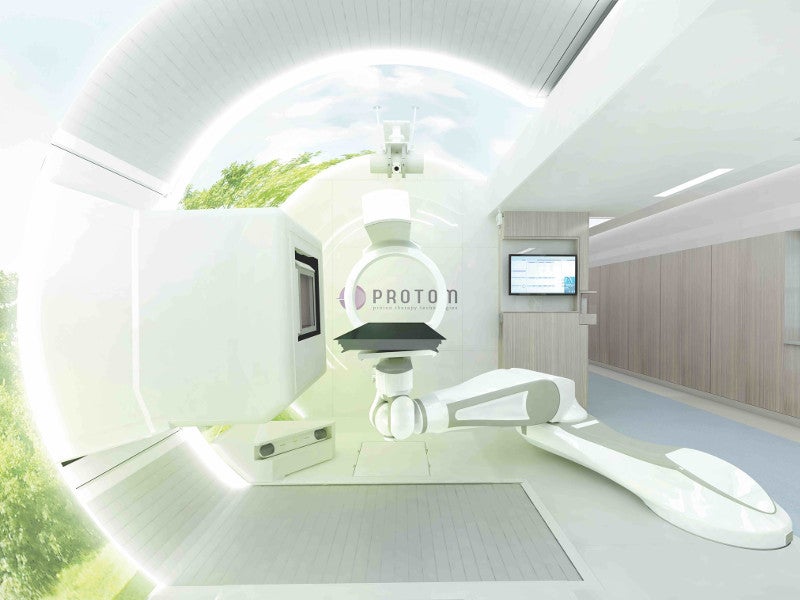
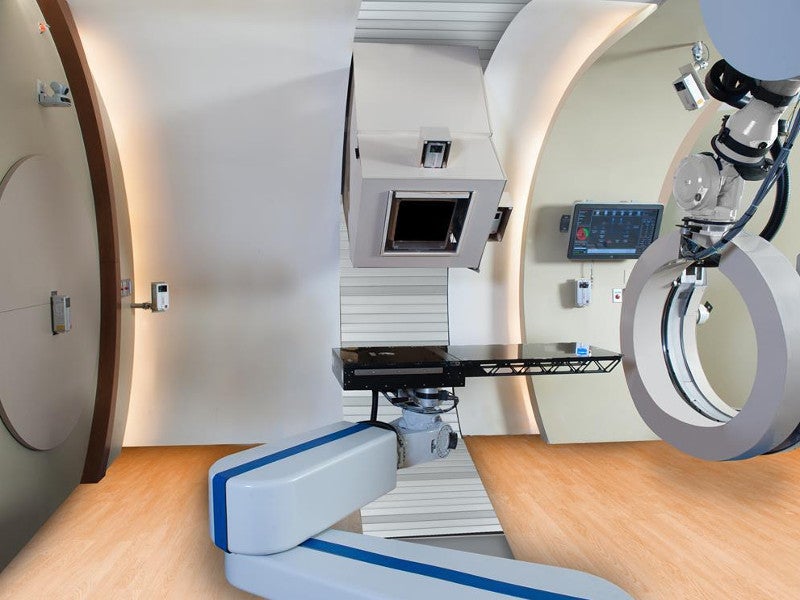
The Radiance 330® proton therapy system is a proton beam delivery device developed by ProTom International that is used to produce and deliver a proton beam for the treatment of cancer patients who are susceptible to conventional radiotherapy.
The US Food and Drug Administration (FDA) provided 510(k) clearance to the device for clinical use in March 2014. The Massachusetts General Hospital (MGH) Department of Radiation Oncology in Boston had the system installed in 2015.
Recommended Buyers Guides

ProTom made modifications for installation at the clinical site and sought further FDA approval in August 2019. The FDA cleared the device installed at MGH in October 2019.
In July 2025, ProTom reached an agreement with Keimyung University Dongsan Medical Centre to bring the Radiance 330 to Korea.
The hospital will be the first to introduce a synchrotron-based proton therapy system to the country. Installation is scheduled to begin in April 2028, with initial patient treatments planned for December 2029.
Radiance 330 proton therapy system design and features
The Radiance 330 system is a modular, single-room system placed inside a radiation-shielded vault made of steel and concrete, measuring approximately 20in x 13in in size and based on Fidelity™, an advanced pencil beam scanning technology.
The system contains six subsystems for beam production, beam transport, beam delivery, gantry, patient positioning and control. A compact synchrotron accelerator with up to 330 Megaelectronvolts of capacity is part of the system.
The Radiance 330 can be customised with interchangeable subsystems and supports single and multi-room configurations.
Functioning of Radiance 330 proton therapy system
The synchrotron accelerator in the system produces a proton beam at a required energy level and sends it to the transport and delivery subsystem, which features bending and focusing magnets with a beam range of 3–38cm into the patient tissue. It guides the beam towards the treatment room, while the delivery subsystem monitors the beam and navigates it to the intended treatment site.
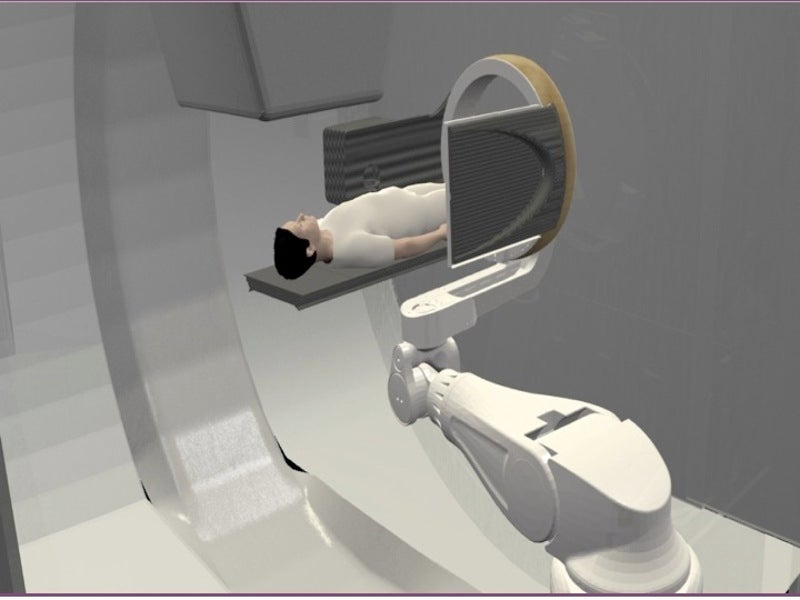
Rotating gantries that align the transport and delivery subsystem mechanically are equipped in treatment rooms, while the floor-mounted patient positioning subsystem orients the patient. Furthermore, modifications to the gantry allow for isocentric or fixed-beam lines with single or several ports.
Imaging and control systems integrate the system. The control subsystem synchronises the functions of various subsystems and establishes connections among the information systems in the hospital. The unique imaging system combines two-dimensional and three-dimensional imaging, as well as a positioning system.
Radiance 330 proton therapy system benefits
The modular design of the system enables purpose-built installation of the system in any existing facility. The system is capable of proton radiography and tomography. The proton beam serves the dual function of imaging and treatment, with optional acceleration for proton imaging of any anatomical site of the patient.
Pencil beam scanning provides high-precision treatment due to its gating capability, delivering a superior dose of the beam with higher efficacies and reduced side effects and improving patient outcomes in the long-term, improving their quality of life.
The synchrotron scatters radiation with low secondary neutrons and reduces radiation risk in the patients. The radiation shielding required for the accelerator is approximately 40% less than that of some of the other systems available in the market.
The system is fitted with orthogonal imaging and can connect with other imaging solutions in the room, such as computed tomography (CT), which allows for the correction of the patient alignment.
Proton therapy treatment details
Proton therapy is an advanced radiation treatment for cancer using proton particles, killing the cancer cells in the patients by destroying their DNA. The patient undergoes either a CT scan or magnetic resonance imaging before the proton therapy to determine the shape and size of the tumour for mapping a suitable treatment plan.
The painless delivery of protons with high precision reduces the radiation risk to healthy tissues. It also reduces the risk of secondary tumours and enables faster recovery in patients than other radiation therapies.
Radiance 330-C proton therapy system
In September 2024, ProTom introduced the Radiance 330-C proton therapy system featuring a compact and modular design.
The system is designed to integrate with Leo Cancer Care’s Marie™ upright patient positioning and imaging platform, helping broaden access to proton therapy for centres facing space and budget constraints.
The Radiance 330-C is available in a range of configurations, from single-room to multi-room installations, and can be adapted to suit any spatial limitations.
The system removes the requirement for a gantry, lowering costs and increasing operational flexibility for proton therapy centres.
The Radiance 330-C proton therapy system has not yet been made available for clinical use.
