
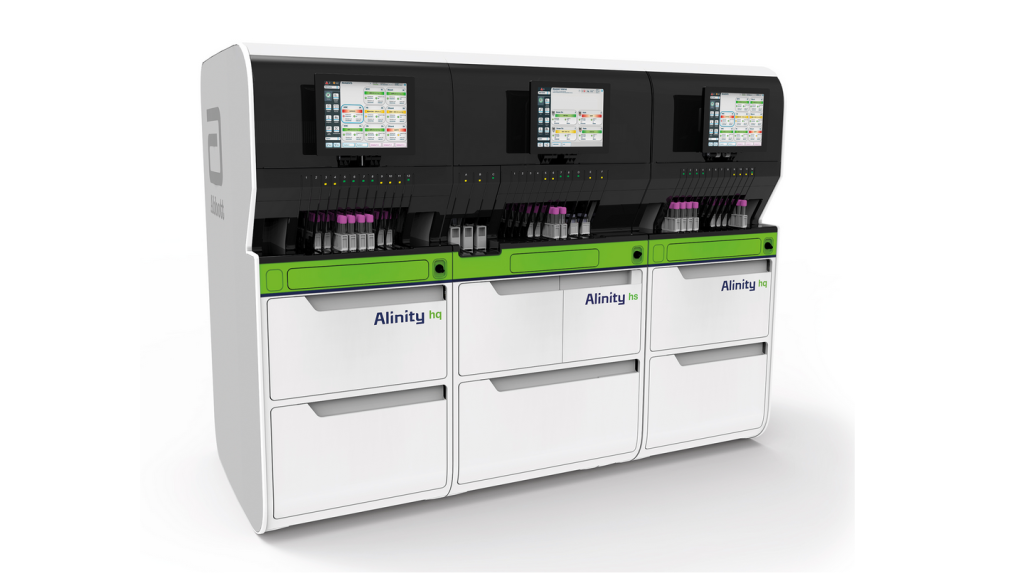
Abbott’s Alinity h-series haematology system receives FDA approval
The system has the potential to process up to 119 complete blood count results per hour.

08 August 2023
08 August 2023
The system has the potential to process up to 119 complete blood count results per hour.
Research suggests recording blood-induced colour changes could be used to estimate heart rate, with potential future use in remote monitoring.

Detecting haemoglobin variants is important in managing conditions such as thalassemia and Sickle Cell Disease.

The app provides instructions and provides encouragement through audio commentary.

The real-time qualitative PCR in vitro diagnostic assay can identify the D842V somatic mutation in the PDGFRA gene.

GeneDx will utilise the PacBio Revio sequencing system for conducting all long-read WGS sequencing and analysis in the study.

A biopolymer delivered to the fallopian tubes triggers scar tissue formation, which causes permanent occlusion.

The companies plan to combine 3D patient-specific implants, PurI-Ti technology and augmented reality with BoneMRI software.


Imagine accessing a sector-specific digital platform that connects you directly with high-intent buyers in the midst of making purchasing decisions. The Buyer’s Guide is your connection to sector specific leads, and it’s the only one of its kind. Have you been listed? Applying is easy and you can do so below.

The COVID-19 pandemic pushed the healthcare industry to rapid digitalization. Increased use of telehealth, telepresence systems, remote diagnostics, predictive AI, and wearable technology is changing how healthcare is delivered and improving patient outcomes. Emerging technologies such as AR and VR are becoming increasingly routine for professional training, surgical assistance, and treatment of psychological and neurological disorders. In the pharma and medical devices industries, AR, VR, and AI are rapidly accelerating drug discovery and manufacturing and generating supply chain efficiencies. New digital opportunities will look to build upon disruptive technologies. However, affordability is a limiting factor to widespread adoption. Per GlobalData estimates, the metaverse market is expected to grow at a CAGR of more than 33% between 2023 and 2030. Although metaverse technologies could reinvent healthcare approaches and bring new experiences to healthcare providers and patients, adoption is still at an early stage. There are currently few use cases in the healthcare industry. The metaverse needs to overcome major challenges for healthcare, including regulation and data privacy concerns. Evidence of proven use cases and participation by a critical mass of users are imperative to drive a shift in metaverse investment.

Give your business an edge with our leading industry insights.