

The intravascular lithotripsy (IVL) market is attracting some of the largest players in the medtech industry, though one of the technology sector’s oldest incumbents is intent on retaining its position at the front.
Shockwave Medical became the first entrant in the IVL space with the European launch of its IVL system for treating peripheral arterial disease (PAD) in 2017, following its receipt of CE mark in 2015. In 2016, the company became the first with an IVL system for PAD treatment to receive US Food and Drug Administration (FDA) approval, launching its first IVL catheter in the US in 2021.
Go deeper with GlobalData


Discover B2B Marketing That Performs
Combine business intelligence and editorial excellence to reach engaged professionals across 36 leading media platforms.
Since then, Shockwave, which was acquired by Johnson and Johnson (J&J) in a $13.1bn deal in June 2024, has continued to innovate in the IVL space, ideating on previous iterations of its own IVL catheters given that challengers in the field remain sparse. Shockwave released its latest IVL catheter, the next-generation C2 Aero for addressing calcified plaques in coronary artery disease (CAD), in May 2026.
The basis of IVL is to use acoustic shock waves to fracture calcifications, making the technology highly applicable to calcified plaques common in vascular pathologies including PAD and CAD.
According to GlobalData analysis, the IVL space, a part of the atherectomy device sector, is projected to reach a valuation of over $2bn in 2034. With this growth, more companies in the medtech industry are eyeing the IVL space, given the technology’s strong safety profile and ease of use in addressing calcified plaques. Both Boston Scientific and Stryker have acquired companies developing IVL systems, while Abbott is advancing its own coronary IVL system. Boston, via subsidiary Bolt Medical, and Elixir Medical are the only major companies that join Shockwave with an approved IVL product.
With its first-to-market advantage, Shockwave already has a significant user base. According to Dr Nick West, chief medical officer at the company, many physicians now report that Shockwave’s IVL catheters have become their standard of care (SoC) approach to treating calcified plaques.
Medical Device Network spoke with West to learn more about the company’s views on the current state of the IVL market, and how it plans to retain its leading position as the field attracts ongoing interest from some of the largest players in the medtech industry.
This interview has been edited for length and clarity.
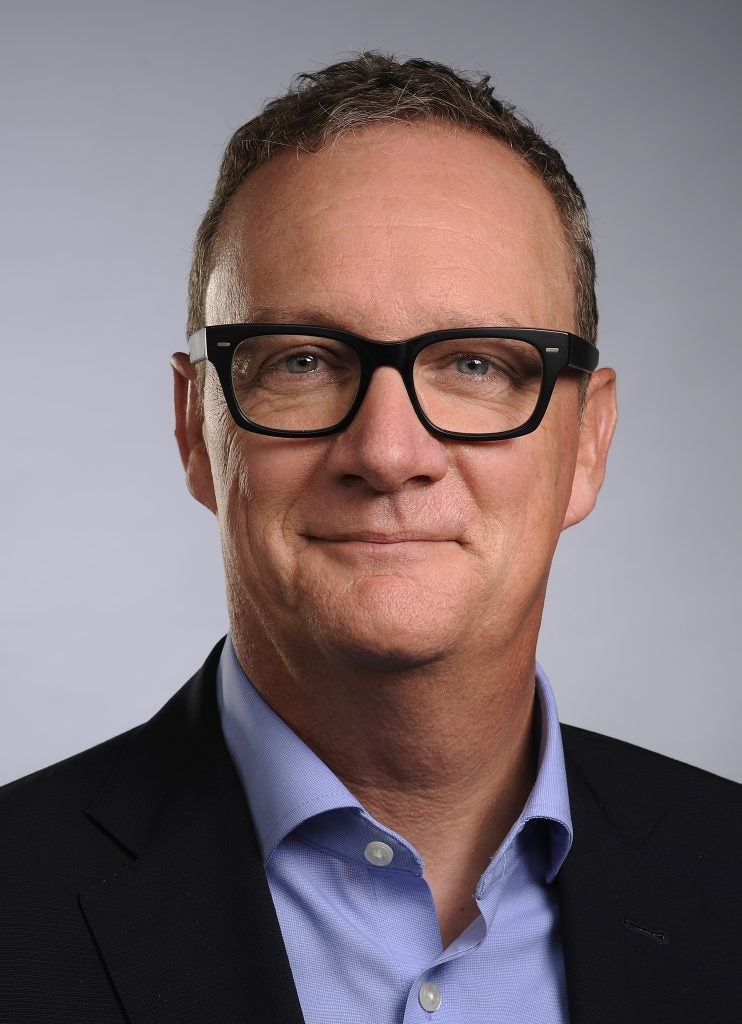
Ross Law: As larger medtech companies invest in or enter the IVL space, where do you believe Shockwave’s competitive edge is strongest today?
Nick West (NW): Shockwave has led the way in three distinct areas since 2017. The first is in innovation. We have launched at least one catheter per year, every year, since 2017 and this innovation has largely been driven by physician needs. We have no intention of stopping that innovation, and we plan to launch one new device every year, certainly until the end of this decade, and I think that’s a pace of innovation that very few will be able to keep up with.
The second area we’ve led in is data acquisition and generation. We have more than 600 publications in the peer-reviewed literature detailing over 25,000 patients that have been treated with IVL. The third aspect is that, in a lot of different geographies around the world, we have developed reimbursement pathways.
We are the leaders, we are the pioneers, we have invented this space, and we have no intention whatsoever of giving up that leadership position.
RL: As the IVL market shows continued signs of growth, where is differentiation is becoming more important?
NW: I think we’re far past the early adoption phase, and the reason I say this is that, for example, in the coronary space, we believe that around one in three percutaneous coronary intervention (PCI) procedures is complicated by the presence of severe or troublesome calcification. Not all of those lesions will necessarily need an advanced calcium modification tool, but a fair proportion likely will.
In the US, where we have good data, we’re already somewhere between 12%-15% penetration, so we’re a long way into penetrating that market. It’s not the same globally, and there are many reasons for that, including availability, guidelines, and reimbursement. But if we look at the uptake of IVL in the US, it’s been a steep upward curve since the original launch in the early 2020s — to go from nothing to 12%, and to see the other forms of advanced calcium modification technologies such as atherectomy take a nosedive in terms of penetration, I think it’s fair to say that we are becoming the new standard of care (SoC).
And that’s evidenced by the fact that if you go to major international scientific congresses, people are now comparing themselves against IVL, and the feedback we get from physicians are that we are the new SoC. In terms of adoption, we’re not quite in a steady state because we believe there is still headroom to go, but certainly we feel we are now part of routine care for patients with complex calcific disease.
As for differentiation, in most global markets, we’re effectively just differentiating against ourselves, simply because in many markets, there aren’t any other IVL products commercially available.
With that said, it’s important to us that we do not rest on our laurels. As IVL continues to be incorporated into clinical practice, there were some things about our device which were not ideal, for example, in getting the balloon to the stenosis being treated. Many physicians felt the balloon was not long enough in the endovascular space. We’ve gone through a cycle of continuously improving our offering, such as in adding to the number of pulses available in the lower limb vasculature and developing longer balloons.
RL: Are physicians the primary source of feedback for innovation at Shockwave?
NW: Very much so. I think physician-driven innovation is our strongest suit. We’ve listened to the needs of the physicians, because we need to listen to patient needs, and, of course, it’s the patient needs expressed through the eyes of the physicians that treat them.
We don’t want to be a tech push; we want to be a need pull. We want to know what the physicians and their patients need, and we will answer those questions, and I think that’s why we’ve been very successful, and why adoption levels have been strong.
RL: What do you view as the greatest opportunity for IVL in the next 5-10 years? Where is the technology currently underutilised?
NW: There are many other blood vessels in the body, and while we have a comprehensive suite of tools for management of lower limb disease, and also now coronary disease with our new C2 Aero device, we are about to start a study in the US with a dedicated device designed to treat calcified carotid artery disease.
While calcification can affect any blood vessel, we know that carotid stenoses, which are often the cause of acute stroke, is another major unmet need. And patients with this condition are often turned down for surgery and are felt to be unsuitable for standard balloon angioplasty. Therefore, this is an area that many vascular surgeons and interventional cardiologists and radiologists find to be a compelling opportunity,
Beyond this area, we have more than 30 active R&D programmes, looking at a wide variety of iterations to our devices, but also to new platforms and therapy areas.
I’m confident that pushing forward in innovation, data generation, and reimbursement will enable Shockwave and J&J MedTech to continue to define the next era of intravascular lithotripsy.
This article is an abridged version of a podcast interview Medical Device Network conducted with Nick West. You can listen to the full conversation here.


