
The Sentire® endoscopic surgical system is an advanced robotic platform for minimally invasive surgery, designed and manufactured by Cornerstone Robotics, a surgical robotics company based in China.
The system has been developed using Cornerstone Robotics’ end-to-end in-house research and development capabilities within a vertically integrated operating model. It is indicated for use in key specialities including urology, gastrointestinal surgery, hepato-biliary-pancreatic surgery, gynaecology and thoracic surgery.
Recommended Buyers Guides

The platform has undergone multicentre clinical trials in both China and the UK, and multiple human clinical trials of the system are currently in progress.
In 2025, Cornerstone Robotics partnered with Portsmouth Hospitals University NHS Trust in the UK to conduct a fully compliant clinical investigation of the Sentire surgical system. This collaboration has been generating real-world clinical data to inform evidence-based research, support the development of training protocols and underpin clinical use of the system.
Regulatory approvals for Sentire surgical system
In September 2024, the Sentire endoscopic surgical system received registration approval from China’s National Medical Products Administration.
In May 2026, the Sentire surgical system was awarded CE mark certification under the EU Medical Device Regulation and, at the same time, obtained regulatory approval from Singapore’s Health Sciences Authority.
These approvals apply to minimally invasive procedures in general surgery, gynaecology, thoracic surgery and urology.
Sentire surgical system details
The Sentire surgical platform uses proportional motion scaling to convert a surgeon’s hand movements into extremely fine instrument actions to perform procedures. It features integrated tremor filtration to support smooth and precise instrument control.
In laparoscopic procedures, this capability supports more accurate minimally invasive surgery, helping to limit tissue damage and support faster recovery after the operation.
The system is built around embedded smart algorithms designed to deliver secure, consistent grasping in every procedure. It continually tracks actuation wire tension and automatically adjusts grip force to counteract mechanical wear over time.
Auto-calibration features and advanced control software further enhance stability and accuracy, helping to preserve dependable performance across repeated uses.
By limiting performance drift and maintaining a steady grasping force throughout the instrument’s service life, Sentire provides reliable, predictable operation, supporting precise, repeatable surgical results.
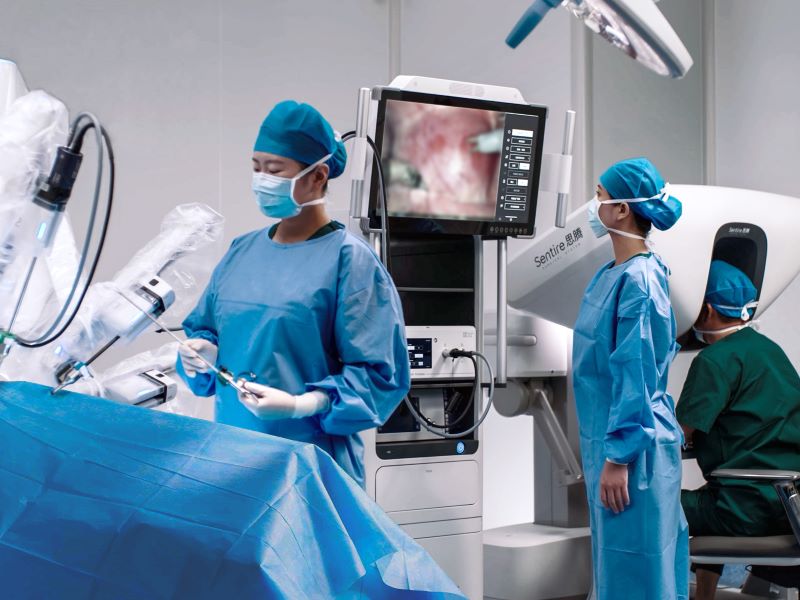
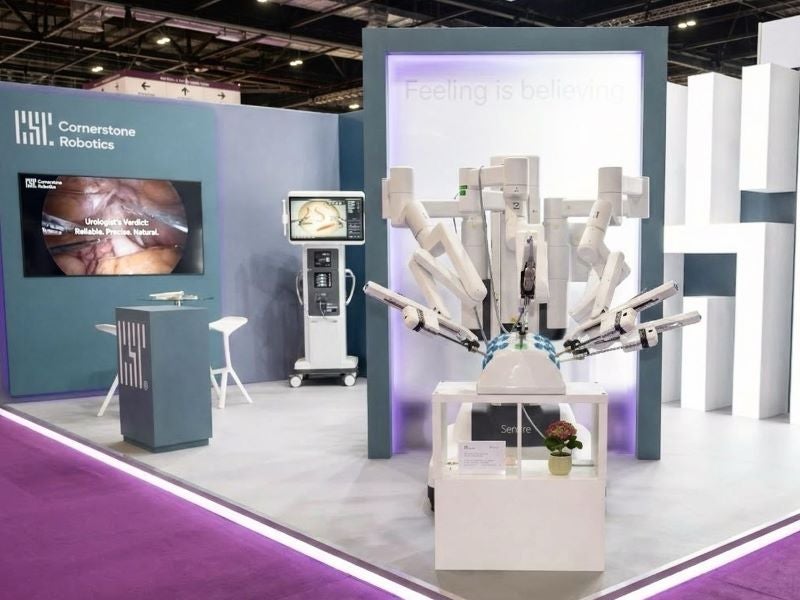
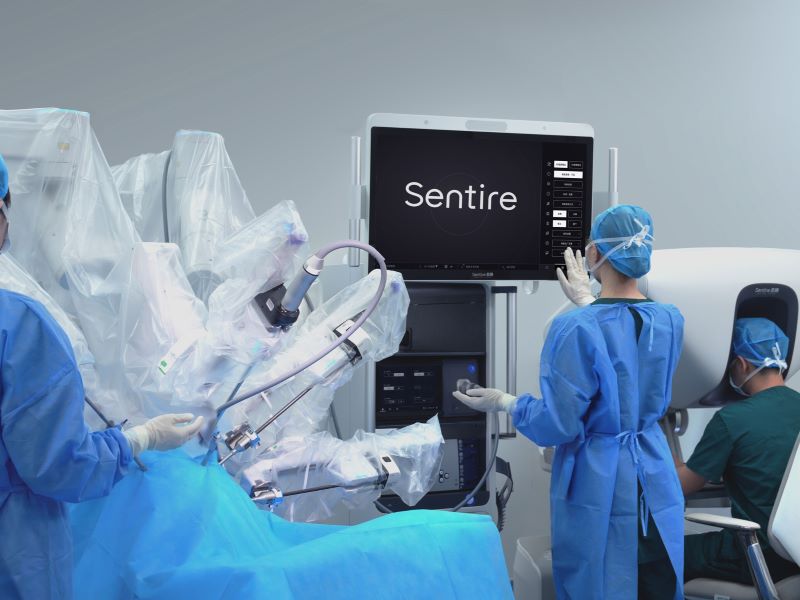
The system is made up of three main components: the patient-side surgical robotic unit, the surgeon’s console and the vision cart.
Surgical robotic unit details
The surgical robotic system comprises four articulated arms extending from a central column that mirror the surgeon’s movements in real time, enabling procedures including cutting, tissue dissection and suturing.
One arm of the system carries an endoscope, which is introduced into the patient’s body cavity to provide live visuals to the surgeon’s console.
The remaining arms hold interchangeable 5mm and 8mm surgical tools such as graspers, needle holders, clip applicators and scissors for performing the procedures.
The system uses Master Grip 2.0 technology, which features magnetic direct-drive architecture alongside gimbal-enabled auto-avoidance to reduce the limitations typically associated with conventional jointed mechanisms. The technology brings together advanced mechatronics and human-centred ergonomics to support enhanced surgeon dexterity.
By materially increasing available degrees of movement, the system translates pivots and rotations with high fidelity, maintaining precision, stability and control.
Surgeon console details
The surgeon’s console serves as the surgeon’s primary workstation throughout the procedure. Built to encourage a natural, upright working position, the console allows straightforward adjustments to sustain comfort during lengthy procedures.
With a comprehensive ergonomic approach, covering everything from visual alignment to foot positioning, the console helps minimise fatigue and supports surgeons in staying fully focused from start to finish.
The console comprises a viewer, two gimbal controllers or hand controls and a set of foot pedals.
Using the viewer, the surgeon receives a real-time high-definition (HD), three-dimensional (3D) visualisation of the operative field, with magnification of up to ten times. An integrated light source combined with automated image-processing algorithms produces brighter, sharper images with more natural colour reproduction, supporting improved tissue differentiation.
Additionally, the surgeon’s console incorporates optical isolation, a wide colour gamut, 3D noise reduction and anti-fog features to maintain a consistently clear, stable operative view.
Positioned beneath the viewer are two gimbal controllers with seven degrees of freedom, which track and translate the surgeon’s hand movements. This setup enables the surgeon to execute instrument-like motions via grippers while keeping their elbows supported on the armrests.
The console foot pedals allow surgeons to toggle operating modes, swap instruments, alter the endoscope orientation and activate instrument functions.
Vision cart details
The vision cart features a touchscreen that displays live endoscopic visuals alongside device settings and system status, enabling theatre staff to assist the surgeon, monitor system connectivity and status during procedures.
The system’s screen supports real-time, multi-colour on-screen markings, allowing assistants to flag key anatomical landmarks and operative stages. These cues are immediately replicated at the surgeon’s console, ensuring both teams work from the same visual reference.
Additionally, the unit contains the energy supply for monopolar and bipolar devices, together with the endoscope’s illumination and camera systems.
