
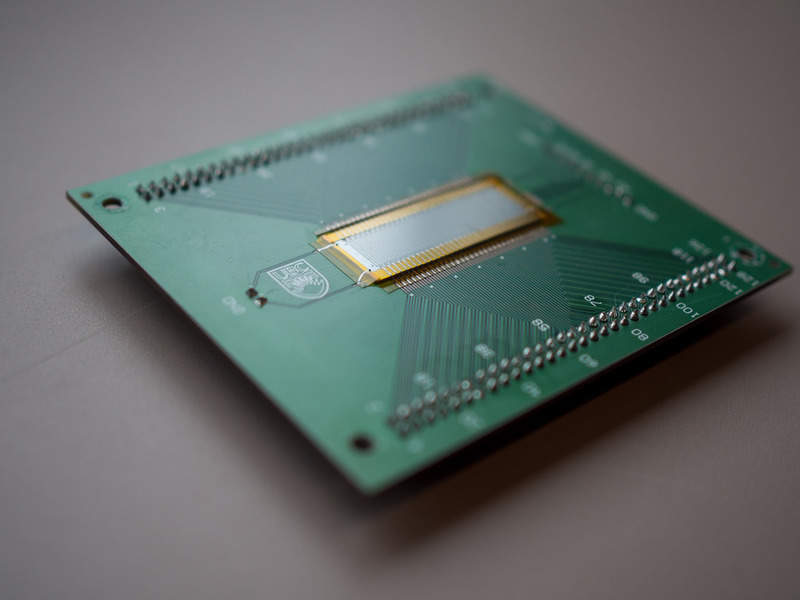
A research team from the University of British Columbia (UBC) has created a new ultrasound transducer that is wearable, portable, cost-effective and can be powered by a smartphone.
Standard ultrasound machines consist of piezoelectric crystals to generate medical images and transmit them to a computer for creating sonograms.

Discover B2B Marketing That Performs
Combine business intelligence and editorial excellence to reach engaged professionals across 36 leading media platforms.
The new wearable ultrasound replaces the piezoelectric crystals with tiny vibrating drums that are made of polymer resin. These are called polymer capacitive micro-machined ultrasound transducers (polyCMUTs) and are cheaper to manufacture.
The new ultrasound scanner is expected to potentially slash the device cost to $100.
Also, the new transducer only requires 10 volts for operation and hence can be powered using a smartphone.
This facilitates its use in remote or low-power locations.
Furthermore, the transducer can be made into a flexible material to be wrapped around the body for easy scanning and detailed views.
UBC electrical and computer engineering PhD candidate Carlos Gerardo said: “Transducer drums have typically been made out of rigid silicon materials that require costly, environment-controlled manufacturing processes, and this has hampered their use in ultrasound.
“By using polymer resin, we were able to produce polyCMUTs in fewer fabrication steps, using a minimum amount of equipment, resulting in significant cost savings.”
The researchers said that the quality of sonograms produced by the wearable ultrasound was similar to or more detailed than those by piezoelectric-based transducers.
The researchers are currently working towards developing different prototypes of their transducer, with plans to investigate its use in various clinical applications in the future.
UBC electrical and computer engineering professor Robert Rohling added: “You could miniaturise these transducers and use them to look inside your arteries and veins.
“You could stick them on your chest and do live continuous monitoring of your heart in your daily life. It opens up so many different possibilities.”


